
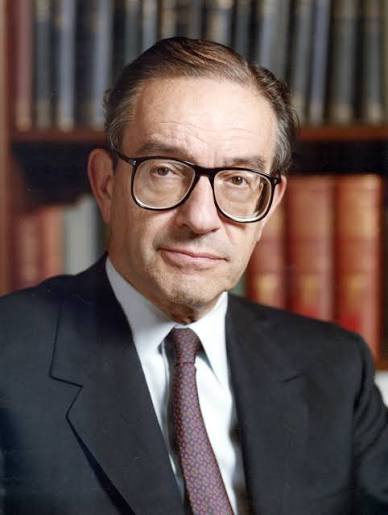
Washington, D.C. — Alan Greenspan, widely regarded as one of the most influential figures in global economics and a former chairman of the Federal Reserve System, has passed away, bringing to a close a career that helped shape modern monetary policy and guide international financial markets for more than two decades.
Greenspan led the Federal Reserve from 1987 to 2006, becoming one of the longest-serving and most respected leaders in the institution’s history. During his tenure, he navigated several pivotal moments for the U.S. economy, including the 1987 stock market crash, the 1997 Asian financial crisis, the rise and collapse of the dot-com bubble, and the economic aftermath of the September 11, 2001 terrorist attacks.
His ability to interpret economic trends and communicate Federal Reserve policy earned him the nickname “The Maestro,” making him one of the most closely watched voices in global finance. Investors, governments, and central banks around the world closely followed his remarks, which often influenced markets and shaped economic expectations.
Originally appointed by President Ronald Reagan, Greenspan was reappointed by both Republican and Democratic administrations, reflecting the broad bipartisan confidence he enjoyed throughout much of his career.
However, his legacy was not without controversy. Following the 2008 financial crisis, many economists questioned some of the policies pursued during his leadership, arguing that an extended period of low interest rates and limited financial regulation contributed to the risks that eventually led to the housing market collapse and the global financial crisis.
Despite those criticisms, Greenspan remains widely recognized as one of the architects of modern monetary policy. His influence extended far beyond the United States, leaving a lasting impact on how central banks manage inflation, economic growth, and financial stability.
News of his passing has prompted reactions from around the world, with political leaders, economists, and financial industry executives highlighting his contributions to global economic development and his role during some of the most significant financial events of the modern era.
With his death, the world loses one of the most prominent figures in contemporary economics, whose legacy will continue to be studied and debated for generations to come.
